



GLP-1 Weight Loss and Protein: Why It Matters When Appetite Drops
GLP-1 medications have changed the conversation around weight loss.
For many people, medications such as Wegovy, Ozempic and Mounjaro can reduce appetite, increase fullness and make weight loss feel more achievable. When hunger drops, portions often become smaller, cravings may feel easier to manage, and food noise can become quieter.
For some people, this can feel like a huge relief.
But there is another side to the conversation that deserves more attention.
When appetite drops, nutrition can drop too.
Eating less may support weight loss, but if protein, fibre and key nutrients fall too low, the body may not feel as strong, energised or well supported. The goal should never be simply to eat as little as possible.
The better goal is to lose weight in a way that protects muscle, supports strength, maintains energy and helps you feel well through the process.
This is where GLP-1 weight loss and protein need to be considered together.
What are GLP-1 medications?
GLP-1 medications are medicines that work in a similar way to hormones your body naturally releases after eating.
These hormones help send messages between the gut, brain and pancreas. They can affect appetite, fullness, digestion and blood sugar regulation.
Common names people may recognise include:
- Ozempic
- Wegovy
- Mounjaro
- Saxenda
- Trulicity
These medications are not all exactly the same.
Some are GLP-1 receptor agonists, such as semaglutide and liraglutide. Mounjaro, which contains tirzepatide, works on both GLP-1 and another hormone pathway called GIP.
In simple terms, these medicines help influence appetite and blood sugar signals in the body, but they do not all work in identical ways.
In Australia, Ozempic is approved for type 2 diabetes, Wegovy is approved for chronic weight management, and Mounjaro is approved for both type 2 diabetes and chronic weight management. This means the reason someone is prescribed one of these medicines can vary.
They should always be used under medical supervision.
While GLP-1 medications can be very effective, they are not a standalone solution. Nutrition, movement, strength training, sleep, medical monitoring and long-term habits still matter.
How do GLP-1 medications reduce appetite?
One of the main ways GLP-1 medications support weight loss is by helping people feel fuller and less hungry. They do this by acting on appetite signals in the brain, which can reduce hunger, cravings and the urge to keep eating.
They also slow gastric emptying, meaning food stays in the stomach for longer, which can help you feel full sooner and stay satisfied for longer. GLP-1 medications can also affect blood sugar and insulin responses, which is why some are used in type 2 diabetes.
Together, these effects can make it easier to eat smaller portions, reduce grazing and feel more in control around food. But it can also mean you get full very quickly, sometimes before you have eaten enough protein, fibre or key nutrients. That is why nutrition quality matters. When appetite is lower, every bite needs to work a little harder.
Why appetite loss can become a nutrition problem
Reduced appetite can be helpful when someone has been struggling with constant hunger, cravings or large portions. But very low appetite can create new challenges.
Some people may find they are:
- feeling nauseous around food
- relying on toast, crackers or plain foods
- forgetting to drink enough water
- getting full before eating enough protein
- choosing whatever feels easiest, rather than what is most nourishing
This is not about trying to make every meal perfect. It is about being more intentional.
If you only feel like eating a small amount, that small amount matters. For example, if appetite is low, it may be more helpful to prioritise Greek yoghurt, eggs, soup with added protein, a smoothie, vegetables, fibre-rich foods or a protein shake rather than filling up on cake, biscuits or low-protein snack foods.
There is still room for enjoyment and flexibility, but when food intake drops, nutrient quality becomes more important. Some people may find speaking with a dietitian very helpful to help guide them through this process.
Why protein matters during GLP-1 weight loss
Protein is important during any weight-loss phase, but it becomes especially important when appetite is reduced.
Protein supports:
- muscle maintenance
- strength
- fullness
- recovery after exercise
- healthy ageing
- daily energy
- better meal structure
When total food intake drops, protein intake can drop quickly too. This can be a problem because weight loss does not only come from body fat. Some weight loss can also come from lean mass, including muscle.
That matters because muscle is not just about looking toned. Muscle supports movement, balance, metabolism, independence, blood sugar control and long-term health.
The risk of losing muscle as well as body fat
Muscle loss is often discussed with GLP-1 weight loss, but it is important to understand what this means.
The medication itself does not directly “break down” muscle, and not everyone using a GLP-1 medication will lose a significant amount of muscle. Muscle loss can happen with many types of weight loss, particularly when weight is lost quickly, food intake drops too low, protein intake is inadequate, or strength training is not part of the routine.
A reduced appetite usually means smaller portions, and for many people this is part of why GLP-1 medications can be effective. The key is making sure those smaller meals still provide enough protein and nutrients to support the body. If food intake drops and the foods chosen are mostly low in protein, or if strength-based exercise is missing, the body may lose more lean mass along with body fat.
This can increase the risk of:
- lower protein intake
- reduced strength
- loss of muscle mass
- fatigue
- reduced exercise capacity
- poorer recovery
- lower nutrient intake
This is why protein and strength training are so important. Protein gives the body the building blocks it needs to support muscle. Strength training gives the body the signal to keep using and maintaining muscle.
Together, they help shift the focus from simply losing weight to improving body composition. That means reducing excess body fat while protecting muscle, strength and function.
Signs you may not be eating enough protein
Many people do not realise their protein intake has dropped until they start noticing changes.
Signs your intake may need review include:
- feeling weak or flat
- low energy
- struggling to recover from exercise
- feeling shaky or lightheaded
- poor meal satisfaction
- relying mostly on toast, crackers, soup or fruit
- losing weight quickly but feeling less strong
- struggling to meet protein across the day
These signs can have many causes, so they should not be ignored. If symptoms are ongoing, it is worth speaking with your doctor, pharmacist or dietitian. But from a nutrition perspective, it can be helpful to ask: “Am I getting protein at each meal?”
For many people on GLP-1 medications, the answer may be no.
How much protein should you aim for?
Protein needs vary depending on body size, age, sex, medical history, activity level and weight-loss goals. There is no single target that suits everyone.
A practical starting point is to include a protein source at each meal, even if the meal is smaller than usual.
This might look like:
- eggs or Greek yoghurt at breakfast
- chicken, tuna, tofu or legumes at lunch
- fish, lean meat, eggs or tempeh at dinner
- a protein-rich snack or shake if appetite is low
Some people may benefit from a more specific protein target, especially if they are older, physically active, losing weight quickly, or trying to preserve muscle. However, people with kidney disease or complex medical conditions should seek personalised advice before significantly increasing protein intake.
The aim is not to force large meals. The aim is to make smaller meals more nourishing.
Protein shakes on Ozempic, Wegovy or Mounjaro: are they useful?
Protein shakes can be useful for some people using GLP-1 medications, especially when appetite is low or full meals feel difficult.
A protein shake may help when:
- breakfast is hard to face
- nausea makes solid food less appealing
- lunch is often skipped
- portions are too small to include enough protein
- protein-rich foods feel heavy
- you need something simple after exercise
- you are relying too much on low-protein snack foods
This does not mean protein shakes should replace all meals. They are best used as a support tool. For example, a protein shake may be useful as a small breakfast, an afternoon option, or a way to add protein when a meal is otherwise light.
A smoothie can also be easier to tolerate than a heavy meal. You might blend protein powder with milk, yoghurt, berries, oats, chia seeds or nut butter, depending on your appetite and goals. The key is to choose options that support nutrition rather than just cutting calories.
Best protein powder for weight loss Australia: what should you look for?
If you are searching for the best protein powder for weight loss in Australia, it is important to look beyond calories alone. The best option is not always the one with the lowest calorie count or the biggest front-label claim.
A good protein powder should help you:
- increase protein intake
- feel satisfied
- support muscle maintenance
- fit into your daily routine
- feel comfortable on your stomach
- support broader nutrition when food intake is lower
This is especially important for people using GLP-1 medications, because smaller meals can make it harder to get enough protein, fibre and nutrients across the day.
What to look for in a protein powder during GLP-1 weight loss
If you are using a protein powder while on GLP-1 medication, look beyond the front label. A good option should be practical, easy to tolerate and designed to support your broader nutrition needs when appetite is reduced.
A meaningful amount of protein
Choose something that provides enough protein to help support daily intake. A very small amount may not make much difference if your overall food intake has dropped.
As a general guide, a protein supplement with around 20–30 g of protein per serve can provide a meaningful boost, especially when used alongside protein-rich meals.
Low added sugar
Some shakes can be higher in sugar than expected. This may not suit people trying to support blood sugar, appetite control or long-term metabolic health.
A gut friendly protein powder
Digestive comfort matters.
GLP-1 medications can already cause nausea, bloating, constipation or diarrhoea in some people, so a protein option that feels too heavy may not be helpful.
A gut friendly protein powder should feel easy to use consistently. Some people find plant-based protein easier to tolerate than whey, particularly if they are sensitive to dairy, although tolerance can vary from person to person.
It may also be helpful to choose a protein powder that includes fibre, especially if constipation or reduced food volume is becoming an issue.
Supportive nutrients
When appetite is reduced, it can be harder to get enough nutrients from food alone.
A protein option that also includes nutrients such as calcium, vitamin D, magnesium, B vitamins or fibre may help support a broader nutrition routine.
Flexible serving size
Some days you may manage a full serve. Other days, a half serve may feel more realistic.
Consistency matters more than perfection.
Managing nausea and constipation on GLP-1 medication
Many people experience digestive changes when starting or increasing GLP-1 medication.
Common side effects can include:
- nausea
- constipation
- diarrhoea
- reflux
- bloating
- feeling full very quickly
This happens partly because these medicines can slow down how quickly food moves through the stomach and gut. Slower transit time can help with fullness, but it can also contribute to nausea, bloating and constipation. Nausea, constipation, diarrhoea and vomiting are commonly reported gastrointestinal side effects with GLP-1 weight-loss medicines.
This is also why doses are often started low and gradually increased. Starting with a lower dose gives the body time to adjust and may help reduce digestive side effects. Your doctor or prescriber will guide the dose schedule.
Nutrition can also make a difference.
Simple strategies include:
- eating slowly
- prioritising protein early in the meal
- avoiding very greasy or heavy meals if they worsen nausea
- drinking enough fluid
- increasing fibre gradually
- including fruit, vegetables, oats, legumes, chia or flaxseed where tolerated
- keeping easy protein options available
- speaking with your doctor or pharmacist if side effects are persistent
If nausea is strong, a heavy meal may feel impossible. In that case, smaller options may be easier, such as Greek yoghurt, a smoothie, soup with added protein, eggs or a protein shake.
Why fibre matters when appetite is low
Fibre is easy to forget about when appetite drops.
But it matters.
Fibre helps support regular bowel movements, gut health, fullness and blood sugar balance. It is especially important if constipation becomes an issue.
When someone is eating much less food, they may also be eating fewer vegetables, legumes, whole grains, seeds and fruit. This can reduce fibre intake and make constipation worse.
To support regularity, it can help to include fibre-rich foods such as:
- vegetables
- berries
- oats
- legumes
- chia seeds
- flaxseed
- whole grains
- nuts and seeds
It is best to increase fibre gradually and drink enough water, because adding lots of fibre too quickly can sometimes worsen bloating or discomfort.
This is one reason a gut friendly protein powder that includes fibre can be useful.
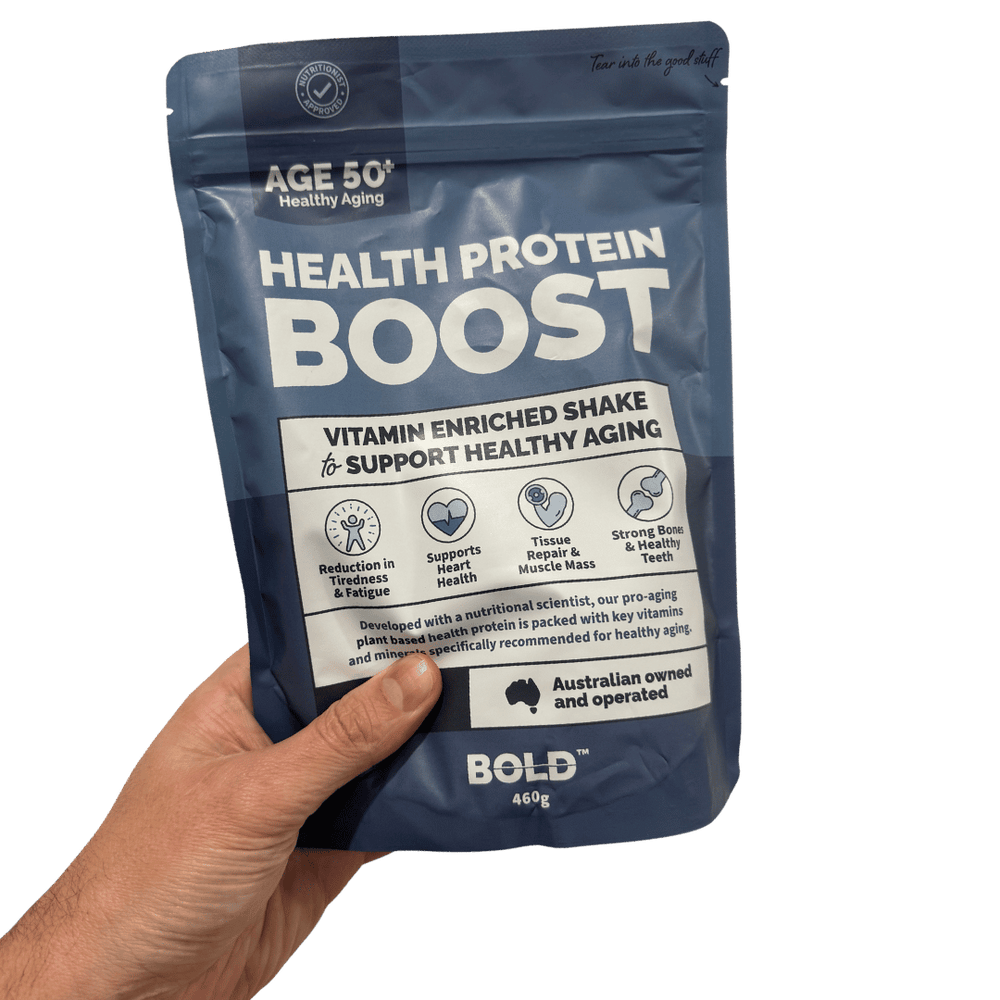
Bold’s Boost Protein contains prebiotic fibre, which can help support a broader gut health and regularity routine when used alongside fluids, fibre-rich foods and regular movement.
Why strength training still matters
GLP-1 medications can help reduce appetite, but they do not replace the need to move your body. Strength training is especially important because it helps the body preserve muscle during weight loss.
This does not need to be complicated.
It may include:
- resistance bands
- weights
- Pilates
- bodyweight exercises
- gym sessions
- supervised exercise physiology
- simple progressive strength exercises at home
Walking is still excellent for cardiovascular health, mental wellbeing and daily movement. But if the goal is to protect muscle, strength training may be the missing piece.
Even two to three sessions per week can help support strength, balance, metabolism and long-term health. Protein and strength training work best together. One supports the building blocks. The other sends the signal.
What happens if you stop GLP-1 medication?
This is a common question.
The honest answer is that the long-term picture is still evolving.
Some people may stay on GLP-1 medication long term. Others may stop because of side effects, cost, supply issues, pregnancy planning, personal preference or advice from their doctor.
Research so far suggests that weight regain can happen after stopping GLP-1 medication, especially if appetite returns and long-term habits are not in place. However, every person is different, and weight maintenance after stopping medication can depend on many factors, including nutrition, activity, strength training, sleep, medical conditions and ongoing support.
This is why it is helpful to build healthy habits while you are still on the medication, not only after stopping.
That includes:
- learning how to build protein-rich meals
- keeping up fibre and fluids
- doing regular strength training
- finding meals you can repeat easily
- understanding hunger and fullness cues
- creating a realistic exercise routine
- having regular follow-up with your healthcare team
GLP-1 medication can reduce appetite, but it is not a replacement for learning how to nourish your body.
The habits you build during treatment may matter later.
Where Bold’s Boost Protein can fit
Bold’s Boost Protein can be used as a simple daily support for people wanting to increase protein intake in a practical way.
For someone using GLP-1 medication, it may be helpful when appetite is low, meals are smaller, or protein-rich foods feel harder to fit in.
It can be added to:
- smoothies
- milk
- yoghurt
- oats
- a small breakfast
- an afternoon drink
- a post-exercise shake
Bold’s Boost Protein provides a meaningful amount of protein per serve and also contains prebiotic fibre, making it a practical option for people looking for a gut friendly protein powder during a weight-loss journey.
It is not designed to replace medical care, and it should not replace balanced meals across the day. Instead, it can be used as part of a broader routine that includes protein-rich foods, fibre, hydration, strength training and regular medical follow-up.
When to speak with your doctor, pharmacist or dietitian
GLP-1 medications should always be used with professional guidance.
Speak with your healthcare provider if you experience:
- ongoing nausea or vomiting
- constipation that does not improve
- signs of dehydration
- dizziness or faintness
- very rapid weight loss
- low blood sugar symptoms, especially if you use diabetes medication
- mood changes
- difficulty eating enough
- concerns about pregnancy, contraception or medication interactions
- questions about stopping or changing your medication
A dietitian can also help you create a realistic eating plan that supports protein, fibre, nutrients and weight management without making meals feel overwhelming.
This is particularly useful if appetite is very low or you are unsure what to eat.
Final thoughts: weight loss should still feel nourishing
GLP-1 medications can be a valuable tool for weight management, but appetite reduction is only one part of the picture. When appetite drops, protein matters more, not less.
Your body still needs nourishment. It still needs protein, fibre, fluids, vitamins, minerals and movement. It still needs strength. The goal is not to eat the least amount possible. The goal is to lose weight in a way that supports muscle, energy, health and confidence.
FAQs
1. Why is protein important on GLP-1 medication?
Protein is important on GLP-1 medication because appetite often drops, which can make it harder to eat enough. Protein helps support fullness, muscle maintenance, strength and recovery during weight loss.
2. How do GLP-1 medications reduce appetite?
GLP-1 medications work by acting on appetite and fullness signals in the body. They can help you feel less hungry, reduce cravings and slow how quickly food leaves the stomach, which can make you feel full sooner and for longer.
3. Can I use protein powder on Ozempic, Wegovy or Mounjaro?
Many people can use protein powder while taking Ozempic, Wegovy or Mounjaro, but it should be used as a nutrition support rather than a replacement for all meals. If you have kidney disease, diabetes complications or complex health needs, speak with your doctor, pharmacist or dietitian for personalised advice.
4. What is the best protein powder for weight loss Australia if I am using GLP-1 medication?
The best protein powder for weight loss Australia will depend on your health needs, tolerance and routine. A good option should provide a meaningful amount of protein, be low in added sugar, feel easy to digest and ideally support broader nutrition with ingredients such as fibre, vitamins or minerals.
5. Why can GLP-1 medications cause constipation?
GLP-1 medications can slow digestion and gut transit time. This can help with fullness, but it may also contribute to constipation, especially if food intake, fibre intake or fluid intake drops. Fibre-rich foods, fluids and movement can help support regularity.
6. What happens if I stop GLP-1 medication?
Some people may regain weight after stopping GLP-1 medication, particularly if appetite increases again and long-term habits are not in place. The research is still evolving, and everyone’s experience is different. It is important to speak with your doctor before stopping and to build sustainable nutrition and exercise habits during treatment.
 Back to BOLD Blog


